
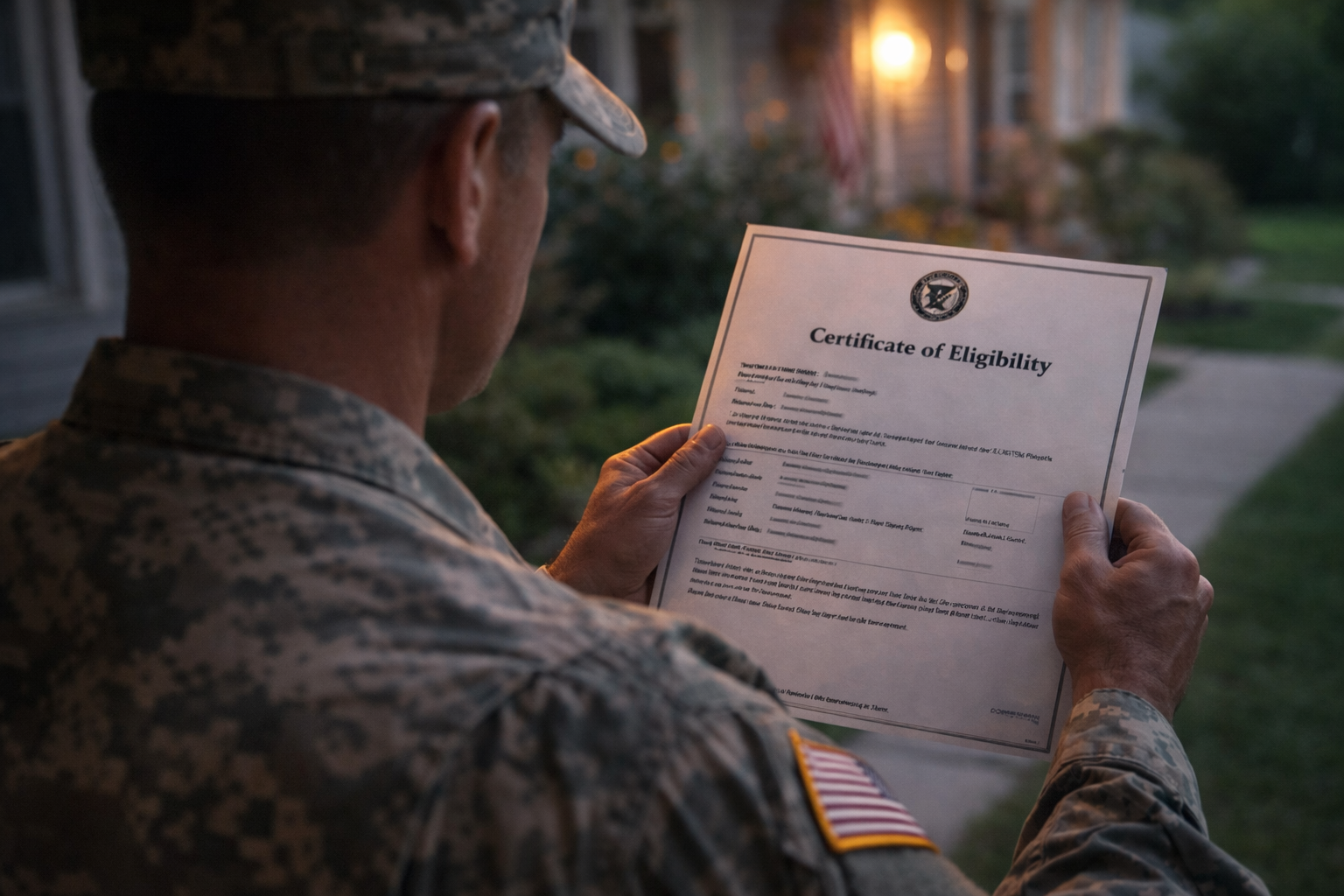
If you’re thinking about using a VA loan, one of the first things you’ll hear about is something called a Certificate of Eligibility, or COE.
It sounds official, and it is. But getting one is usually easier than most people expect.
This article explains what a COE is, why it matters, and how to get yours without unnecessary stress.
What Is a VA Certificate of Eligibility?
A VA Certificate of Eligibility (COE) is a document issued by the Department of Veterans Affairs that confirms you’re eligible to use the VA home loan benefit.
It tells lenders:
- That you qualify for a VA loan
- How much entitlement you have available
- Whether you’re exempt from the VA funding fee
Without a COE, a lender can’t finalize a VA loan.
Who Needs a COE?
You’ll need a COE if you are:
- A veteran
- An active-duty service member
- A qualifying National Guard or Reserve member
- An eligible surviving spouse
Even if you’ve used a VA loan before, you’ll still need a COE for a new loan.
The Good News: Getting a COE Is Usually Simple
Many veterans assume getting a COE means paperwork, delays, or government back-and-forth.
In reality, most COEs are issued electronically in minutes.
In many cases, you won’t even need to handle it yourself.
How to Get Your VA COE
There are three main ways to obtain your COE.
1. Through a VA-Approved Lender (Easiest Option)
This is the most common and simplest method.
Most VA-approved lenders can request your COE directly from the VA using their system. If your records are available, it often comes back instantly.
You’ll typically just need:
- Your full name
- Social Security number
- Date of birth
For many borrowers, this step happens automatically during pre-approval.
2. Online Through the VA Website
You can also request your COE yourself through the VA’s online portal.
You’ll need to:
- Log in with a verified ID.me account
- Provide service-related information
- Download the COE once issued
This option works well if you want to review your eligibility before speaking with a lender.
3. By Mail (Slowest Option)
You can request a COE by mailing VA Form 26-1880 to the VA.
This method is rarely recommended unless absolutely necessary, as it can take several weeks to process.
What If the VA Can’t Find My Records?
Sometimes, especially with older service records or certain Guard and Reserve cases, the VA may need additional documentation.
That might include:
- DD Form 214
- Statement of service
- Proof of qualifying service
If that happens, it doesn’t mean you’re not eligible — it just means the VA needs more information.
A knowledgeable lender can usually help resolve this without much hassle.
Does a COE Mean I’m Approved for a Loan?
No — and this is an important distinction.
A COE only confirms eligibility, not loan approval.
You’ll still need to qualify based on:
- Income
- Credit
- Debt levels
- Property requirements
Think of the COE as unlocking the VA loan benefit. The loan approval comes next.
Why It’s Smart to Get Your COE Early
Even if you’re not ready to buy yet, getting your COE early can help you:
- Avoid last-minute delays
- Understand your entitlement
- Move quickly when the right home comes along
It’s a low-effort step that can save time later.
Talk to Doma Loans
If you want help obtaining your COE or understanding what it means for your home-buying plans, Doma Loans can help make the process straightforward.
You can speak with a VA-experienced loan specialist by calling 888-658-3662, or learn more at
https://www.domaloans.com/.
When you’re ready, you can start an application anytime at
https://mortgage.new/ — no pressure, just clear guidance and next steps.
Leave a Reply